Rent vs. Buy Calculator: 2026 Tax-Aware Home vs. Rental Cost Comparison
This Rent vs. Buy Calculator helps you compare the long-term financial impact of renting a home versus buying one.
Rent vs. Buy Calculator
Home Purchase
Home Rental
Return & Tax
Calculation Results
| At | Buying | Renting | ||
|---|---|---|---|---|
| Initial Costs | ||||
| Recurring Costs | ||||
| Opportunity Costs | ||||
| Net Proceeds | ||||
| Total | ||||
| Staying Length | Average Buying Cost | Average Renting Cost | ||
| Monthly | Annual | Monthly | Annual | |
Why We Built This Rent vs. Buy Calculator
Many rent-versus-buy calculators on the internet are useful, but they often simplify the comparison too much. Some omit important costs such as opportunity cost, security deposits, PMI, HOA fees, maintenance, selling costs, capital gains tax, or the effect of tax deductions. Others use outdated federal tax assumptions, including older standard deduction amounts and marginal tax brackets. Some calculators also become slow or unresponsive when many years of projections are displayed.
This calculator was developed to provide a more complete and transparent comparison. It is designed to include the major cash-flow components of both renting and buying, apply modern tax assumptions, and show a year-by-year breakdown so users can better understand where the final result comes from.
2026 U.S. City Rent vs. Buy Benchmark
The table below compares selected U.S. cities using median home price, median monthly rent, and the price-to-rent ratio. The price-to-rent ratio is calculated as:
A higher ratio generally means buying is more expensive relative to renting. A lower ratio may suggest that buying is more financially competitive, although local taxes, insurance, HOA fees, mortgage rates, and personal holding period still matter.
| City | Median Home Price | Median Monthly Rent | Price-to-Rent Ratio | General Signal |
|---|---|---|---|---|
| San Francisco, CA | $1,300,000 | $3,200 | 33.9 | Renting Advantage |
| New York, NY | $750,000 | $3,500 | 17.9 | Neutral |
| Los Angeles, CA | $950,000 | $2,800 | 28.3 | Renting Advantage |
| Seattle, WA | $800,000 | $2,200 | 30.3 | Renting Advantage |
| Austin, TX | $480,000 | $1,800 | 22.2 | Neutral to Rent |
| Chicago, IL | $330,000 | $1,900 | 14.5 | Buying Advantage |
| Houston, TX | $310,000 | $1,600 | 16.1 | Neutral to Buy |
| Dallas, TX | $380,000 | $1,700 | 18.6 | Neutral |
Note: These figures are simplified 2026 benchmark estimates for educational comparison. Local neighborhood-level prices, mortgage rates, tax rates, insurance costs, and HOA fees can materially change the result.
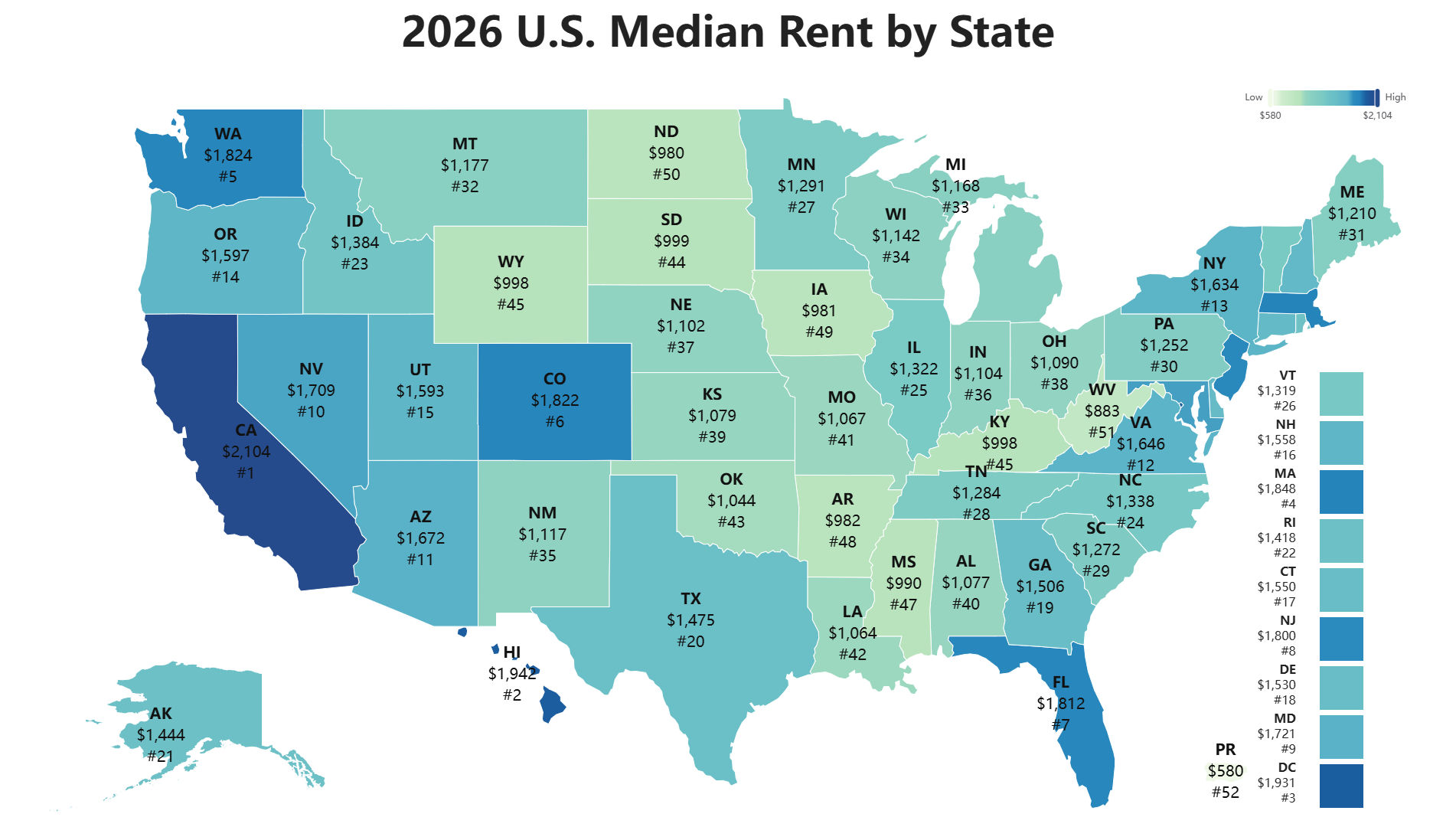
How to Interpret the Price-to-Rent Ratio
| Price-to-Rent Ratio | Typical Interpretation |
|---|---|
| Below 15 | Buying may be financially attractive, assuming you can stay long enough and afford ownership costs. |
| 15 to 20 | Mixed zone. The decision depends heavily on mortgage rate, taxes, insurance, appreciation, and holding period. |
| 20 to 25 | Renting may be relatively attractive unless home appreciation is strong or you plan to stay long term. |
| Above 25 | Renting often has a financial advantage, especially in expensive coastal markets. |
The Real Cost of Buying a Home
Many buyers compare rent only against the mortgage payment. In reality, the cost of owning a home includes much more than principal and interest. Property taxes, homeowners insurance, maintenance, HOA fees, PMI, utilities, closing costs, and selling expenses can significantly change the result.
According to consumer finance guidance, non-loan ownership costs can represent a large share of total housing costs over a long holding period. For a realistic comparison, this calculator includes both recurring costs and one-time costs.
Example: Estimated Annual Cost of a $500,000 Home
| Cost Item | Estimated Annual Cost | Explanation |
|---|---|---|
| Mortgage Principal & Interest | $31,128 | Approximate payment on a $400,000 loan at 6.75% over 30 years. |
| Property Tax | $5,500 | Example using 1.1% of home value per year. |
| Homeowners Insurance | $1,750 | Varies widely by state, property type, risk, and coverage level. |
| Maintenance and Repairs | $5,000 | Common planning estimate: about 1% of home value per year. |
| HOA Fees | $0 to $6,000+ | Applicable to many condos, townhomes, and planned communities. |
| Total | $43,378+ | Equivalent to about $3,615+ per month before one-time costs. |
The 5-Year Rule and Break-Even Analysis
Financial planners often refer to a “5-year rule” for home buying. The idea is simple: if you do not expect to stay in the home for at least five years, buying may be less attractive because transaction costs are front-loaded and selling costs are high.
Why Short Holding Periods Can Hurt Buyers
- Purchase closing costs: Buying closing costs often range from about 2% to 5% of the home price. On a $500,000 home, that can be $10,000 to $25,000.
- Selling costs: Real estate agent commissions and seller closing costs can total about 6% to 8% of the sale price. On a $500,000 home, selling costs can be $30,000 to $40,000.
- Early mortgage payments are interest-heavy: During the first several years of a 30-year mortgage, most of the payment usually goes toward interest, not principal reduction.
- Opportunity cost: A down payment and closing costs could have been invested elsewhere. If investment returns are strong, renting and investing the difference can be financially competitive.
This calculator estimates the break-even year by comparing the total cost of buying with the total cost of renting over time. If the buying cost becomes lower than the renting cost in a specific year, that year can be interpreted as the estimated break-even point.
Qualitative Rent vs. Buy Checklist
A mathematically cheaper option is not always the best life decision. Use this checklist to evaluate whether buying fits your lifestyle, flexibility needs, and maintenance tolerance.
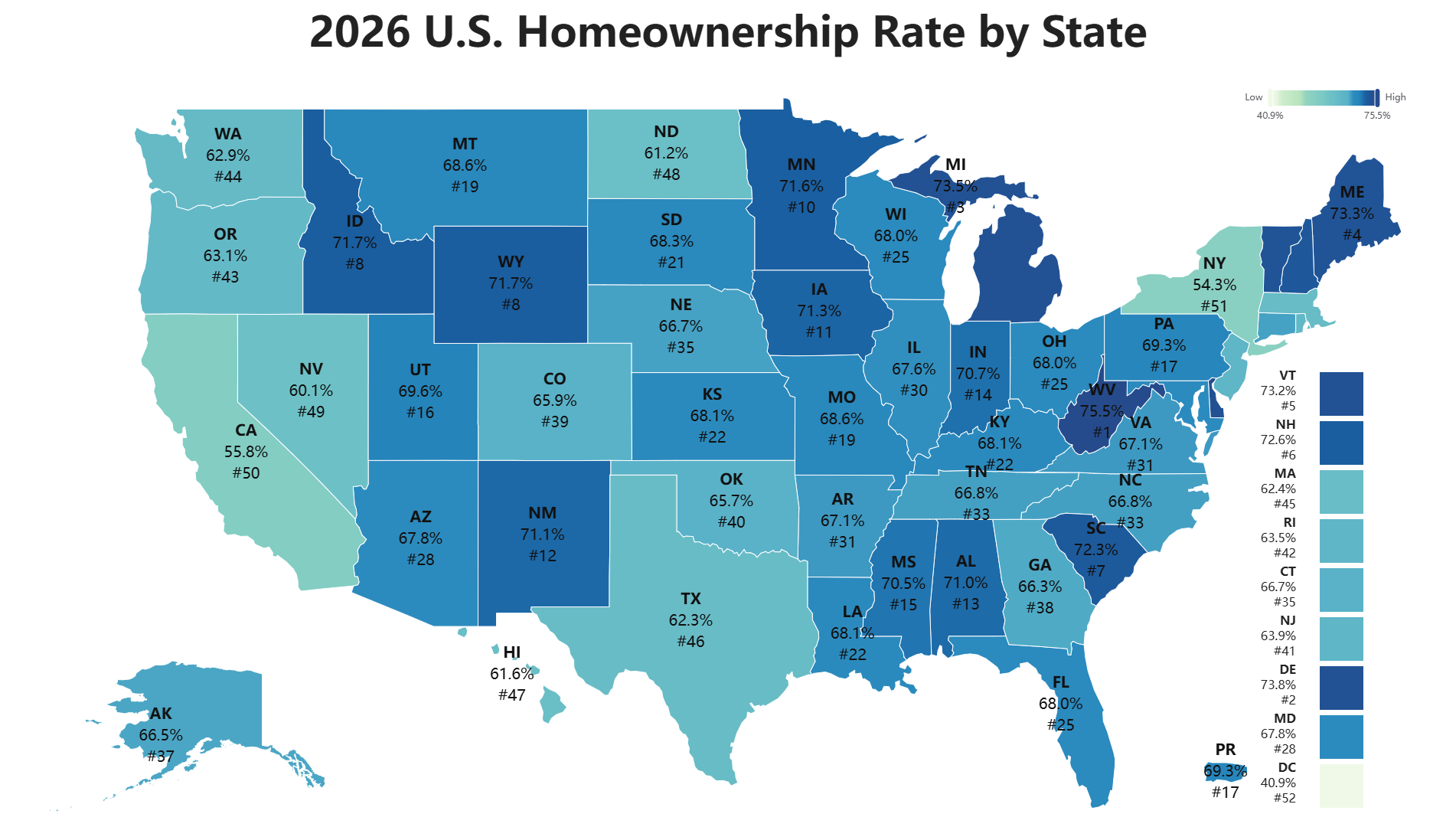
How the Calculator Works
1. Initial Costs
Initial costs are one-time costs paid at the beginning of the comparison period.
- Buying initial costs: down payment plus buying closing costs.
- Renting initial costs: security deposit, upfront cost, broker fee, and moving expenses.
The calculator also applies opportunity cost to these initial costs because money used for a down payment, closing costs, or rental deposits could otherwise have been invested.
2. Recurring Costs
Recurring costs are costs that occur during the holding period.
Buying recurring costs include:
- Mortgage payments
- Property taxes
- Home insurance
- HOA fees
- Maintenance costs
- PMI, when applicable
- Additional monthly utility costs
- Tax savings from deductible mortgage interest and property taxes, when applicable
Renting recurring costs include:
- Monthly rent
- Renter's insurance
In the JavaScript calculation, annual recurring costs are generally handled as yearly cash flows. That means the calculator totals the costs for a given year and then compounds that annual amount to the end of the comparison period using the after-tax investment return.
For mortgage payments specifically, the calculator does not compound each of the 12 monthly mortgage payments separately. Instead, it sums the 12 mortgage payments for that year and treats the total as a year-end cash flow for opportunity-cost purposes.
3. Opportunity Cost
Opportunity cost represents the investment growth you may give up when money is used for housing costs instead of being invested.
The calculator uses an after-tax investment return:
After-tax investment return = Average investment return × (1 − combined tax rate)
The combined tax rate is the federal marginal tax rate plus the state marginal tax rate, capped in the calculation at 60%. The inflation input is disabled in the current interface and does not affect the displayed results.
4. Mortgage Payment Treatment When Loan Term Is Shorter Than 30 Years
The calculator builds an amortization schedule from the loan amount, interest rate, and loan term. If the loan term is shorter than the full 30-year comparison period, mortgage payments stop being counted after the modeled loan-payment period.
For example, if the loan term is 20 years, the current JavaScript logic stops counting mortgage payments starting in year 20. After that point, ownership costs may still include property taxes, insurance, HOA fees, maintenance, utilities, and other non-mortgage costs.
5. Property Tax, Insurance, HOA, Utility, and Maintenance Growth
- Property tax uses its own annual Property Tax Increase input.
- Home insurance grows with the Cost/Insurance Increase input.
- HOA fees grow with the Cost/Insurance Increase input.
- Additional utility costs also grow with the Cost/Insurance Increase input.
- Maintenance cost grows with the home appreciation rate when appreciation is entered as a percentage.
6. PMI Treatment
PMI is applied when the down payment is below 20%. The calculator checks the mortgage balance at the start of each year. PMI is counted when the beginning-of-year loan balance is more than 80% of the original home price.
7. Tax Deduction Treatment
The calculator estimates tax savings from itemized deductions using mortgage interest plus property tax. If that amount exceeds the standard deduction, the excess is multiplied by the combined marginal tax rate.
The standard deduction assumptions used in the current model are:
- Single: $16,100
- Married filing jointly: $32,200
- Married filing separately: $16,100
- Head of household: $24,150
- Qualified widow(er): $32,200
This is a simplified tax model. The current calculation does not enforce every real-world tax limitation, such as all SALT deduction rules, mortgage acquisition debt limits, AMT effects, income phaseouts, or local tax rules.
8. Home Value Appreciation
Home appreciation can be entered as either a percentage or a dollar amount.
- If entered as a percentage, the ending home value is calculated as:
Home price × (1 + appreciation rate)years - If entered as a dollar amount, the ending home value is calculated as:
Home price + annual dollar appreciation × years
9. Capital Gains Tax and Primary Residence Exclusion
When estimating sale proceeds, the calculator considers selling costs, remaining mortgage balance, and capital gains tax.
The simplified capital gain calculation is:
Gross capital gain = Ending home value − selling costs − cost basis
The cost basis used by the calculator is:
Cost basis = original home price + buying closing costs
The calculator then subtracts a primary residence sale exclusion assumption before applying the capital gains tax rate entered by the user.
- Single: $250,000
- Head of household: $375,000
- Married filing jointly: $500,000
- Married filing separately: $250,000
- Qualified widow(er): $500,000
The capital gains tax calculation uses the Capital Gains Tax Rate input. It does not automatically add state capital gains tax unless the user includes it in the input.
10. Net Proceeds
Net proceeds are treated as money recovered at the end of the comparison period.
- Buying net proceeds: estimated sale proceeds after selling costs, capital gains tax, and remaining loan balance.
- Renting net proceeds: returned security deposit.
Because net proceeds reduce total cost, they appear as negative costs in the cost breakdown.
Example Calculation
The following simplified example uses the calculator's default-style assumptions for a 1-year comparison period:
- Home price: $300,000
- Down payment: 20% = $60,000
- Loan amount: $240,000
- Interest rate: 6.5%
- Loan term: 30 years
- Buying closing costs: 3% = $9,000
- Monthly rent: $2,000
- Security deposit: $2,000
- Average investment return: 5%
- Federal marginal tax rate: 25%
- State tax rate: 0%
Step 1: Initial Costs
Buying initial costs:
$60,000 down payment + $9,000 closing costs = $69,000
Renting initial costs:
$2,000 security deposit + $150 upfront cost = $2,150
Step 2: Opportunity Cost
The after-tax investment return is:
5% × (1 − 25%) = 3.75%
Approximate 1-year opportunity cost:
- Buying: $69,000 × 3.75% ≈ $2,587.50
- Renting: $2,150 × 3.75% ≈ $80.63
Step 3: Recurring Costs
The mortgage payment on a $240,000 loan at 6.5% for 30 years is approximately $1,517 per month, or about $18,204 for the first year.
Buying recurring costs also include property tax, insurance, maintenance, HOA, PMI if applicable, and additional utilities. Tax savings are subtracted when mortgage interest plus property tax exceeds the applicable standard deduction.
Renting recurring costs include annual rent and renter's insurance. In the current JavaScript model, the first-year rent amount is multiplied by the rent-increase factor for year 1.
Step 4: Net Proceeds
At the end of the year, the buying side estimates home sale proceeds:
Sale proceeds = ending home value − selling costs − capital gains tax − remaining loan balance
The renting side treats the returned security deposit as net proceeds:
Renting net proceeds = −$2,000
Step 5: Total Cost
The calculator groups the result into:
- Initial Costs
- Recurring Costs
- Opportunity Costs
- Net Proceeds
Total cost is calculated as:
Total = Initial Costs + Recurring Costs + Opportunity Costs + Net Proceeds
Key Input Explanations
Security Deposit
A security deposit is money paid to the landlord before moving in. It is usually refundable if there is no unpaid rent or property damage. This calculator treats the deposit as an initial cash outflow and then returns it as net proceeds at the end of the rental period. The true cost of the deposit is mainly its opportunity cost.
Capital Gains Tax Rate
The capital gains tax rate is used to estimate tax on taxable home-sale gains after the modeled primary residence exclusion. The calculator uses the rate entered by the user and does not automatically add state capital gains tax.
Initial Costs
Initial costs are paid at the beginning of the comparison. For buying, this includes down payment and buying closing costs. For renting, this includes security deposit, upfront costs, broker fees, and moving expenses.
Recurring Costs
Recurring costs are ongoing costs during the holding period. For buying, they include mortgage payments, taxes, insurance, maintenance, HOA, PMI, and utilities. For renting, they include rent and renter's insurance.
Opportunity Costs
Opportunity costs estimate the investment growth that could have been earned if housing-related cash flows had been invested instead.
Net Proceeds
Net proceeds are amounts recovered at the end of the period. For homeowners, this is the estimated cash received after selling the home and paying selling costs, capital gains tax, and the remaining mortgage balance. For renters, this is the returned security deposit.
References
The following official government resources may help users understand the tax and housing concepts used in this calculator:
- IRS: Standard Deduction
- IRS Publication 936: Home Mortgage Interest Deduction
- IRS Publication 523: Selling Your Home
- IRS Topic No. 409: Capital Gains and Losses
- Consumer Financial Protection Bureau: Owning a Home
- U.S. Department of Housing and Urban Development: Buying a Home
Disclaimer
This calculator is for educational and informational purposes only. It is not financial, legal, investment, mortgage, real estate, or tax advice. The results are estimates based on the inputs and simplified assumptions in the calculator. Actual costs, tax benefits, mortgage terms, home appreciation, rent increases, insurance premiums, property taxes, investment returns, and sale proceeds can vary significantly.
Tax rules are complex and may change. This calculator uses simplified tax logic and does not account for every federal, state, or local tax rule. Before making a home purchase, rental, investment, or tax decision, consult a qualified financial advisor, tax professional, mortgage professional, or real estate professional.
Write Reply to This Calculator