Credit Card Payoff Calculator - Estimate Payments & Interest
Credit Card Payoff Calculator
Repayment Plan Overview & Financial Summary
Detailed Repayment Schedule & Amortization Tables
| Month | Principal | Interest | Ending Balance |
|---|
| Year | Principal | Interest | Ending Balance |
|---|
Payment Breakdown: Principal vs. Interest
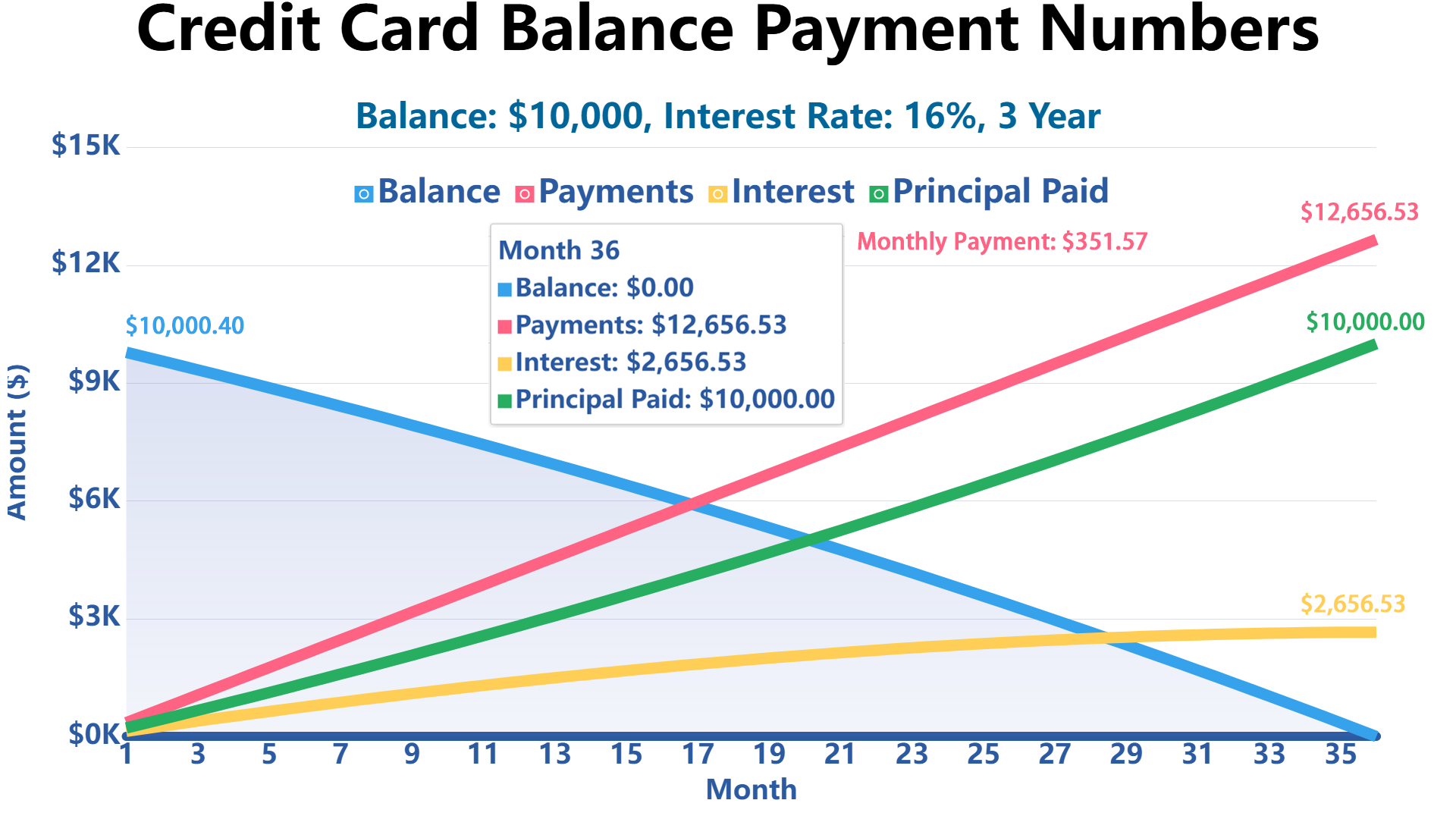
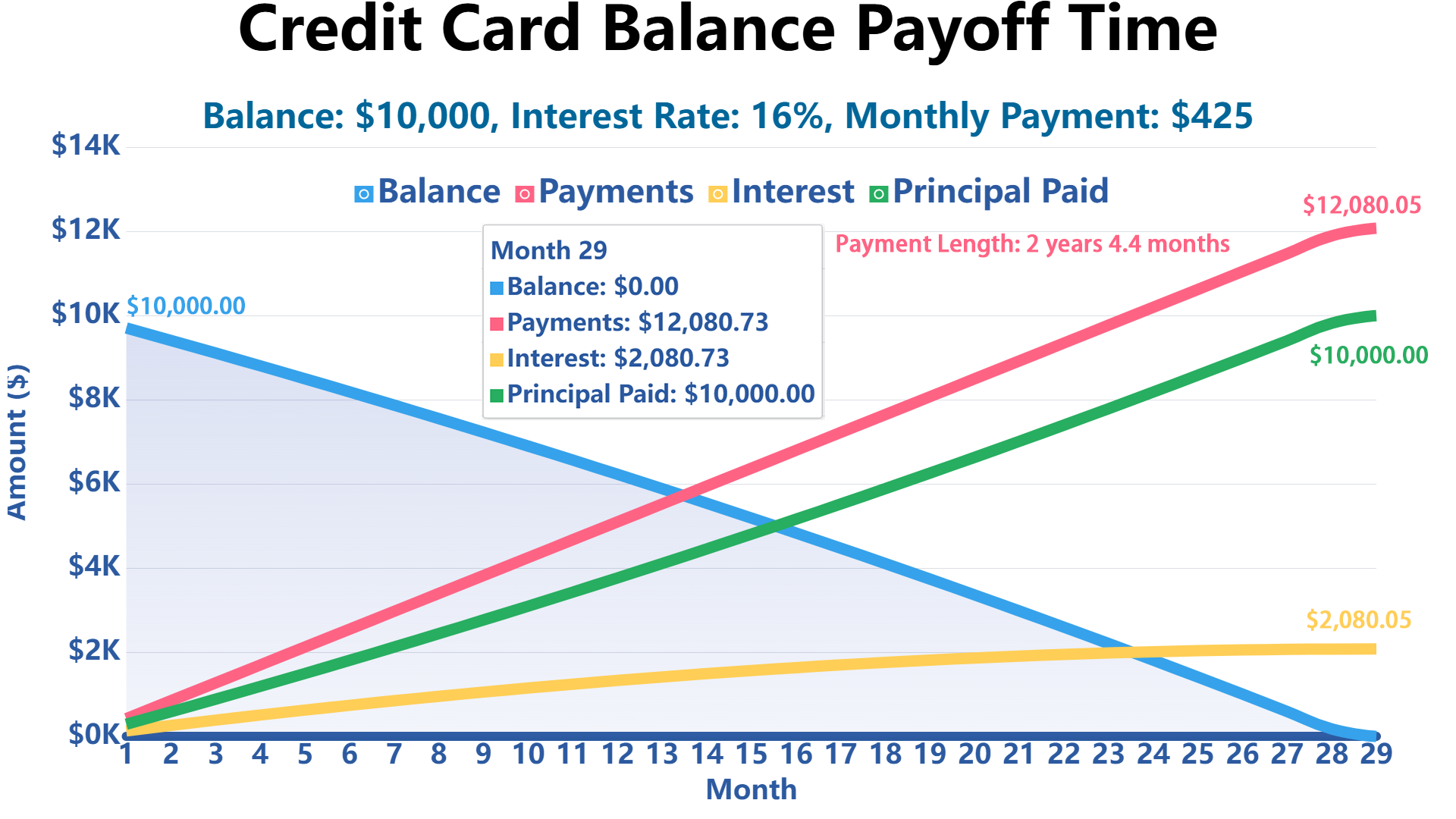
Credit Card Balance Reduction & Cumulative Payment Trends
How to Use the Credit Card Payoff Calculator
Step-by-Step Instructions:
- Enter Your Credit Card Balance: Input your current outstanding balance in dollars.
- Input Annual Interest Rate: Enter your credit card's Annual Percentage Rate (APR) as shown on your statement.
- Choose Your Payoff Strategy:
- Fixed Monthly Payments: Enter the amount you can afford to pay each month
- Fixed Repayment Period: Enter how long you want to take to pay off the debt
- Click Calculate: View your personalized repayment plan with detailed breakdowns
Understanding Your Results:
- Payment Every Month: Your required monthly payment amount
- Repayment Period: Total time needed to eliminate your debt
- Total Payments: Sum of all payments you'll make
- Total Interest: Extra amount paid beyond your original balance
Credit Card Interest Calculation Formulas
Monthly Payment Calculation (Fixed Term):
M = P × [r(1+r)^n] / [(1+r)^n - 1]
Where:
- M = Monthly payment amount
- P = Principal balance (credit card debt)
- r = Monthly interest rate (Annual rate ÷ 12)
- n = Total number of months
Payoff Time Calculation (Fixed Payment):
n = -log(1 - (P × r) / M) / log(1 + r)
Where:
- n = Number of months to pay off
- P = Principal balance
- r = Monthly interest rate
- M = Fixed monthly payment
Interest Calculation Each Month:
Monthly Interest = Remaining Balance × (Annual Rate / 12)
Principal Payment = Monthly Payment - Monthly Interest
New Balance = Previous Balance - Principal Payment
Total Interest Calculation:
Total Interest = (Monthly Payment × Number of Months) - Original Balance
Credit Card Debt Payoff Strategies & Analysis
1. Debt Avalanche Method
Pay minimums on all cards, then put extra money toward the card with the highest interest rate. This method saves the most money in interest over time.
2. Debt Snowball Method
Pay minimums on all cards, then put extra money toward the card with the smallest balance. This method provides psychological motivation through quick wins.
3. Balance Transfer Strategy
Transfer high-interest debt to a card with a lower promotional rate (often 0% APR). Be aware of transfer fees and the promotional period end date.
4. Debt Consolidation
Combine multiple debts into one loan with a lower interest rate. This simplifies payments and can reduce overall interest costs.
Impact of Extra Payments
Even small additional payments can significantly reduce payoff time and total interest. For example, paying an extra $50/month on a $5,000 balance at 18% APR can save hundreds in interest and shorten payoff time by years.
Minimum Payment Warning
Making only minimum payments (typically 2-3% of balance) can result in decades of payments and thousands in interest. Credit card companies are required to show this information on your monthly statement.
References & Additional Resources
Government Resources:
- Consumer Financial Protection Bureau - Credit Card Interest Rates
- Federal Reserve - Credit Card Interest Rate Information
- Federal Trade Commission - Choosing a Credit Card
- U.S. Treasury - Financial Education Resources
Educational Resources:
- CFPB - Debt Management Strategies
- FDIC Money Smart Financial Education
- SEC - Credit and Your Consumer Rights
Write Reply