Mutual Fund Calculator
Calculate Investment Returns with Fees and Charges
Mutual Fund Calculator
Calculation Results
Amortization Table
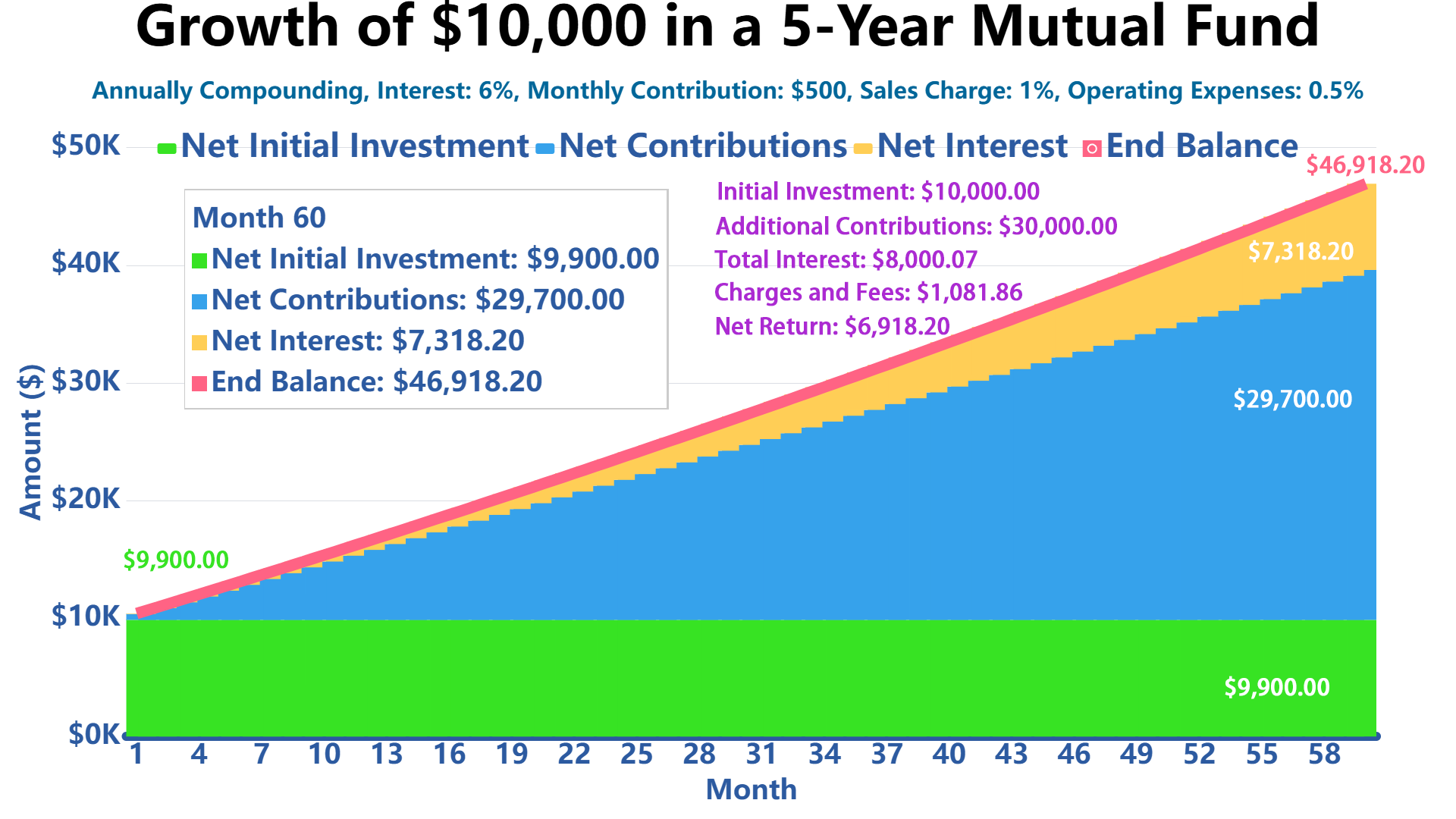
Investment Growth Visualization
What Are Mutual Fund Fees and How Do They Affect Your Returns?
Mutual fund fees can significantly impact your investment returns over time. Here are the main types of fees:
Sales Charges (Loads)
Front-End Load: A percentage fee charged when you purchase shares, typically ranging from 3% to 5.75%. This reduces your initial investment amount.
Back-End Load (Deferred Sales Charge): A fee charged when you sell shares, often decreasing over time. Many funds waive this fee after 5-7 years.
Operating Expenses (Expense Ratio)
Annual fees covering fund management, administration, and other operational costs. The average expense ratio for actively managed mutual funds is around 0.5% to 1.5% per year. Index funds typically have lower expense ratios (0.05% to 0.5%).
Impact on Returns
Even small differences in fees can significantly affect long-term returns. For example, a 1% annual fee on a $100,000 investment over 30 years could cost you over $80,000 in lost returns (assuming 7% annual growth).
What Are the Best Mutual Fund Investment Strategies?
Dollar-Cost Averaging
Investing a fixed amount regularly (monthly or annually) regardless of market conditions. This strategy can reduce the impact of market volatility and lower your average cost per share over time.
Contribution Increases
Gradually increasing your contributions each year (e.g., 3-5% annually) can significantly boost your long-term returns, especially when aligned with salary increases or inflation.
Compounding Frequency
More frequent compounding generally results in higher returns. However, the difference between monthly and daily compounding is typically minimal for most mutual funds.
FAQ
What Is a Good Rate of Return for a Mutual Fund?
Historically, the average annual return for stock mutual funds has been around 10% before fees. However, returns vary significantly based on fund type, market conditions, and time period. Bond funds typically return 4-6%, while balanced funds fall in between.
How Do Operating Expenses Affect My Returns?
Operating expenses are deducted from fund assets annually, reducing your net returns. A fund with a 1% expense ratio earning 8% gross returns will provide approximately 7% net returns to investors.
Should I Choose a Fund With a Sales Charge or No-load Fund?
No-load funds (no sales charges) are generally preferable for individual investors, as they allow your full investment to work for you immediately. However, some load funds may offer superior management that justifies the fees.
What Is Net IRR and Why Is It Important?
Net IRR (Internal Rate of Return) is the annualized rate of return that accounts for all cash flows (contributions and withdrawals) and fees. It provides a more accurate measure of investment performance than simple return calculations.
How Often Should I Contribute to My Mutual Fund?
Monthly contributions through dollar-cost averaging can help smooth out market volatility and build wealth consistently. However, the best frequency depends on your cash flow and investment strategy.
References
Government and Regulatory Resources
- U.S. Securities and Exchange Commission (SEC) - Mutual Funds - Official guide to understanding mutual funds, fees, and investor protections
- Investor.gov - Mutual Funds and ETFs - Educational resources from the SEC's Office of Investor Education
- FINRA - Investment Funds - Information on mutual fund types, costs, and selection from the Financial Industry Regulatory Authority
- Consumer Financial Protection Bureau (CFPB) - Money as You Grow - Financial education resources for investors
- IRS Publication 550 - Investment Income and Expenses - Tax information for investment income
Additional Educational Resources
- SEC - Mutual Fund Fees and Expenses - Detailed breakdown of mutual fund costs
- FINRA - Mutual Fund Fees and Expenses Alert - Understanding how fees impact returns
Compound Interest and Investment Mathematics
- Federal Reserve - Compound Interest - Understanding compound interest basics
Write Reply to This Calculator